

When it comes to materials used in various industries, thermal conductivity plays a crucial role. It determines how well a material can transfer heat, which is essential in applications such as heat exchangers, electrical conductors, and even in some structural components where heat dissipation is a concern. As a supplier of Copper Steel Bimetal Flat Sheet, I am often asked about how its thermal conductivity compares to other materials. In this blog post, I will delve into this topic and provide a comprehensive analysis.
Understanding Thermal Conductivity
Thermal conductivity, denoted by the symbol k, is a property of a material that describes its ability to conduct heat. It is defined as the quantity of heat, Q, transmitted through a unit thickness, L, in a direction normal to a surface of unit area, A, due to a unit temperature gradient, ΔT, under steady-state conditions. Mathematically, it is expressed as (Q = -kA\frac{dT}{dx}), where (\frac{dT}{dx}) is the temperature gradient.
The SI unit of thermal conductivity is watts per meter-kelvin (W/(m·K)). A high thermal conductivity value means that the material can transfer heat efficiently, while a low value indicates poor heat transfer capabilities.
Thermal Conductivity of Copper Steel Bimetal Flat Sheet
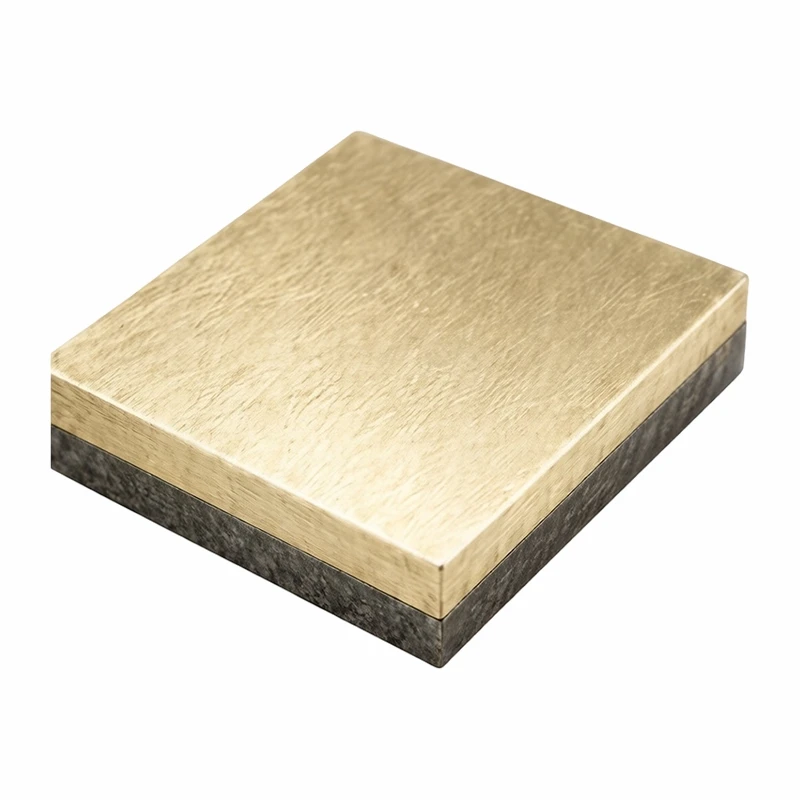
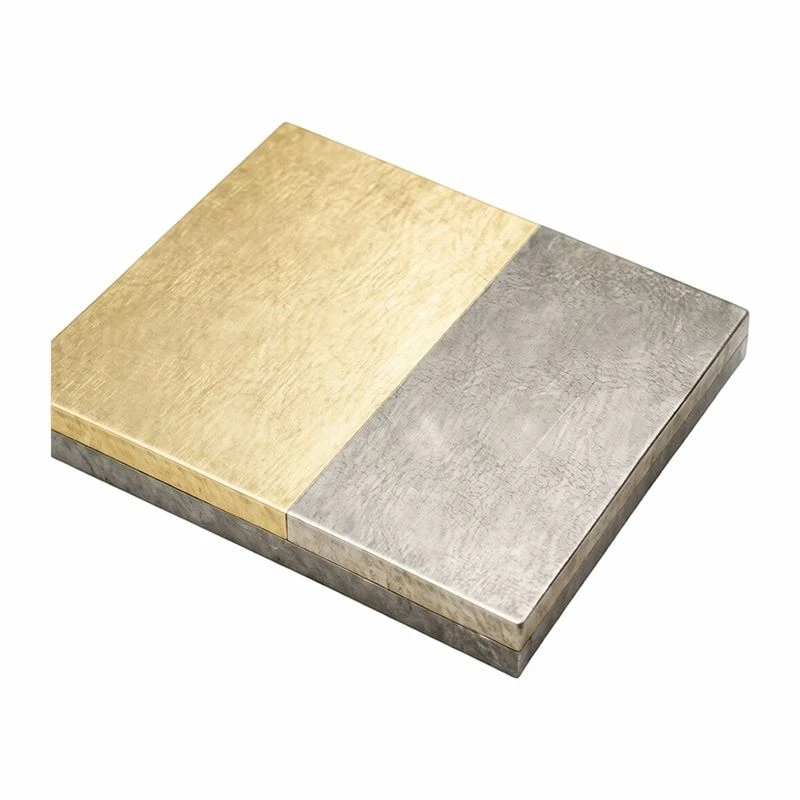
Copper steel bimetal flat sheet is a composite material that combines the properties of copper and steel. Copper is known for its excellent electrical and thermal conductivity, with a thermal conductivity of around 385 - 401 W/(m·K) at room temperature. Steel, on the other hand, has a relatively lower thermal conductivity, typically in the range of 16 - 54 W/(m·K), depending on the type of steel.
The thermal conductivity of the copper steel bimetal flat sheet depends on several factors, including the thickness of the copper and steel layers, the bonding method between the two materials, and the purity of the copper and steel used. In general, the thermal conductivity of the bimetal sheet will lie between the thermal conductivities of copper and steel. However, due to the high thermal conductivity of copper, the bimetal sheet tends to have a relatively high thermal conductivity compared to pure steel.
Comparison with Other Materials
Copper vs. Copper Steel Bimetal Flat Sheet
As mentioned earlier, pure copper has a very high thermal conductivity. When comparing copper with the copper steel bimetal flat sheet, pure copper will have a slightly higher thermal conductivity. However, the bimetal sheet offers other advantages that make it a more suitable choice in some applications. For example, steel provides mechanical strength and durability, which may be required in certain structural or wear-resistant applications. The combination of copper's high thermal conductivity and steel's strength makes the bimetal sheet a versatile material.
Aluminum
Aluminum is another commonly used material in heat transfer applications. It has a thermal conductivity of about 205 W/(m·K), which is lower than that of copper but still relatively high. Compared to the copper steel bimetal flat sheet, aluminum may have a lower thermal conductivity, especially if the bimetal sheet has a significant copper layer. However, aluminum is lighter and more corrosion-resistant than steel, which makes it a preferred choice in applications where weight and corrosion are major concerns, such as in the aerospace industry.
Stainless Steel
Stainless steel is widely used in various industries due to its corrosion resistance and mechanical properties. The thermal conductivity of stainless steel is relatively low, typically in the range of 12 - 16 W/(m·K). In comparison, the copper steel bimetal flat sheet has a much higher thermal conductivity, making it a better choice for heat transfer applications. The use of the bimetal sheet allows for a balance between the corrosion resistance of stainless steel and the high thermal conductivity of copper.
Bimetal Composite Bronze Steel Sheet
Bronze is an alloy of copper and other metals, typically tin. The thermal conductivity of bronze varies depending on its composition, but it is generally lower than that of pure copper. The bimetal composite bronze steel sheet combines the properties of bronze and steel. Similar to the copper steel bimetal flat sheet, its thermal conductivity will be between that of bronze and steel. However, since the thermal conductivity of bronze is lower than that of pure copper, the copper steel bimetal flat sheet may have a higher thermal conductivity in most cases.
Bimetal Wear Resistant Plate Stock
The bimetal wear resistant plate stock is designed mainly for wear resistance applications. While it may also have some heat transfer capabilities, its primary focus is on providing high wear resistance. The thermal conductivity of this plate stock will depend on the materials used in its construction. In general, compared to the copper steel bimetal flat sheet, it may have a lower thermal conductivity if the wear-resistant materials used have poor heat transfer properties.
Applications Based on Thermal Conductivity
The thermal conductivity of a material determines its suitability for different applications. The copper steel bimetal flat sheet, with its relatively high thermal conductivity, is suitable for a wide range of applications:
Heat Exchangers
In heat exchangers, the efficient transfer of heat is essential. The high thermal conductivity of the copper steel bimetal flat sheet allows for rapid heat transfer between two fluids. The steel layer provides the necessary mechanical strength to withstand the pressure and flow of the fluids, while the copper layer facilitates heat transfer.
Electrical Conductors
Copper is widely used in electrical conductors due to its high electrical conductivity, which is closely related to its thermal conductivity. The copper steel bimetal flat sheet can be used in electrical applications where both electrical and thermal conductivity are required, such as in busbars and electrical connectors. The steel layer adds mechanical support to the copper, reducing the risk of deformation or breakage.
Thermal Management in Electronics
In electronic devices, heat dissipation is a critical issue. The copper steel bimetal flat sheet can be used as a heat sink or a thermal interface material to transfer heat away from heat-generating components. The high thermal conductivity of the sheet ensures efficient heat transfer, preventing overheating of the electronic components.
Advantages of Choosing Copper Steel Bimetal Flat Sheet
Besides its thermal conductivity, the copper steel bimetal flat sheet offers several other advantages:
Cost-Effectiveness
Compared to using pure copper in large quantities, the copper steel bimetal flat sheet is more cost-effective. The use of steel reduces the overall cost of the material, while still maintaining a relatively high thermal conductivity due to the presence of the copper layer.
Mechanical Strength
The steel layer provides excellent mechanical strength and durability to the bimetal sheet. This makes it suitable for applications where the material needs to withstand mechanical stress, such as in the construction of machinery and equipment.
Customizability
The thickness and composition of the copper and steel layers in the bimetal sheet can be customized according to the specific requirements of the application. This allows for the optimization of the material's properties, such as thermal conductivity, mechanical strength, and corrosion resistance.
Conclusion
In conclusion, the thermal conductivity of the copper steel bimetal flat sheet is relatively high compared to many other materials, especially those with a significant steel component. While it may not have the highest thermal conductivity like pure copper, it offers a unique combination of thermal conductivity, mechanical strength, and cost-effectiveness. Its performance makes it a suitable choice for a wide range of applications, including heat exchangers, electrical conductors, and thermal management in electronics.
If you are considering using Copper Steel Bimetal Flat Sheet in your project or application, I encourage you to contact me for more information and to discuss your specific requirements. I am confident that our high-quality bimetal sheets will meet your needs and provide excellent performance.
References
- Incropera, F. P., & DeWitt, D. P. (2001). Fundamentals of Heat and Mass Transfer. John Wiley & Sons.
- Holman, J. P. (2002). Heat Transfer. McGraw-Hill.
- ASM Handbook Committee. (2004). ASM Handbook, Volume 2: Properties and Selection: Nonferrous Alloys and Special-Purpose Materials. ASM International.